 Abashiri Cruises
Home › Guides › Hokkaido in February: Drift Ice Season in Abashiri
Hokkaido in February: Drift Ice Season in Abashiri
Hokkaido in February is drift ice season on the Okhotsk coast, and the Aurora operator names mid-February to early March as the historical best window for an Abashiri cruise. This guide covers the ice timing, the February weather in Abashiri (a normal daily high of -2.0 C), what a cruise day looks like, what to do if there is no ice and which tours fit the month.
Quick answer February is drift ice season in Abashiri. Mid-February to early March is the prime cruise window.
February sits inside the Aurora icebreaker's January 20 to March 31 season, the heart of drift ice season on Hokkaido's Okhotsk coast. The operator says the best ice was historically seen from mid-February to early March. Ice is a natural phenomenon, so it is never guaranteed on a given day and can change within hours.
Key takeaways
- Compare the Abashiri cruise with the tours that include it before you pick a date
- Learn when drift ice reaches Abashiri each season
- Know the no-ice fallback cruise
- Plan around February weather in Hokkaido
Is February a good time to visit Hokkaido?
Yes, if you want drift ice, because February sits inside the Abashiri cruise season and the historical best window opens in mid-February.
For a drift ice traveller February is the point of the whole trip. JNTO traces the ice to the Amur River, about 1,000 kilometres north, and Abashiri is one of the few towns where a ship takes you into it.
Why February works for an Abashiri cruise
The Aurora's season runs January 20 to March 31, so any February date falls inside it. The operator names mid-February to early March as the period when ice was historically best. That makes a mid-February booking the safest bet for your Abashiri cruise.
One warning matters. Warming has delayed and reduced the ice, so past patterns may not hold. In one recent season the first drift ice day at Abashiri came on February 15, 24 days behind the long-term average. Build one or two spare days into your plan.
What else February brings
The rest of Hokkaido has its own winter events, mostly inland and to the west. JNTO lists the Sapporo Snow Festival among them. Pair one with Abashiri and you get both sides of a Hokkaido February, but allow a long travel day between them.
| Event | When | Where |
|---|---|---|
| Sapporo Snow Festival | February | Odori Park, Susukino, Tsudome Dome |
| Lake Shikotsu Ice Festival | Winter | Lake Shikotsu |
| Otaru Snow Light Path | Winter evenings | Otaru canal district |
| Drift ice season in Abashiri | January 20 to March 31 | Okhotsk coast, Abashiri |
Sources: Abashiri Cruises (Aurora), Abashiri Cruises (Aurora), JMA archive.
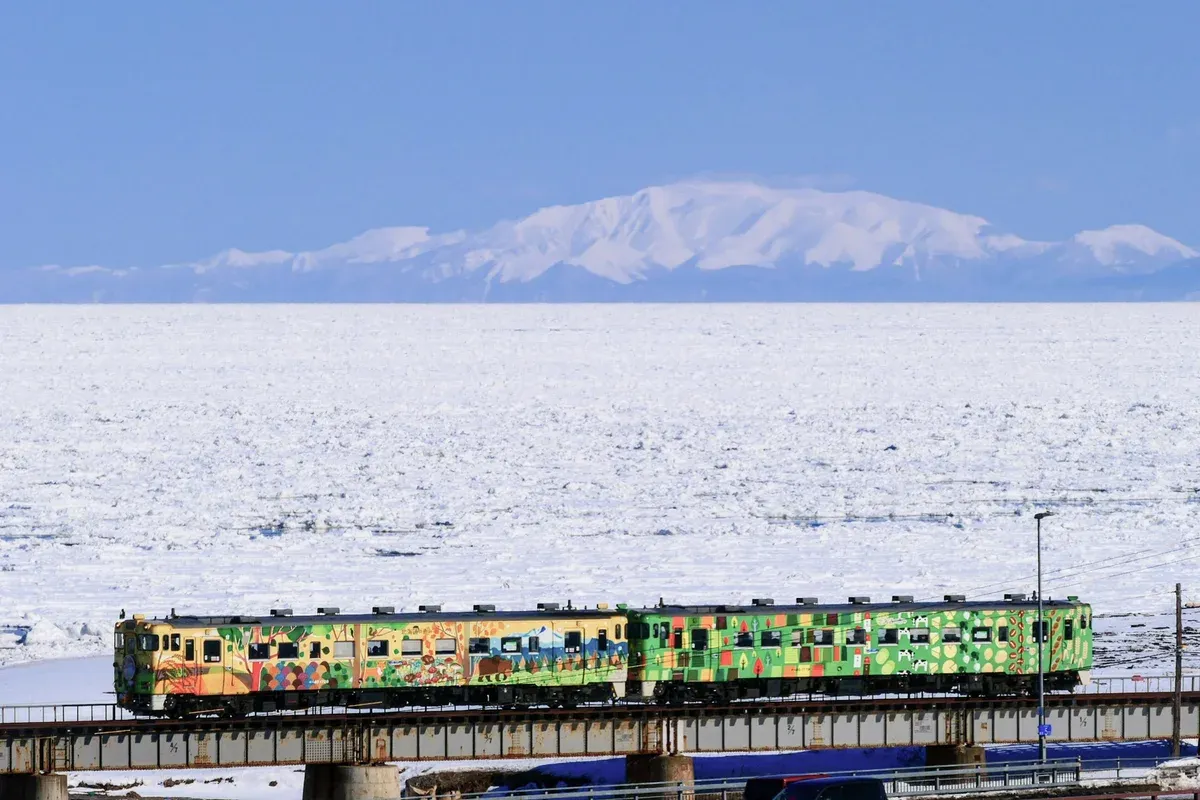
A Senmo Line train passing the drift ice on the Okhotsk coast. Photo: MaedaAkihiko, CC0, via Wikimedia Commons
Which is the best month to go to Hokkaido?
For drift ice in Abashiri the best month is February, with early March a strong second.
There is no single best month for all of Hokkaido. It depends on what you came for. For this page the question is narrower, and the answer is February.
Month by month on the Okhotsk coast
JNTO says drift ice is visible along the Okhotsk Sea coast from mid-January to late March. The Aurora's first sailing day is January 20, and Hokkaido Love says the ice typically reaches Abashiri from late January. The operator names mid-February to early March as historically best.
February is the middle of that window.
| Month | Drift ice outlook in Abashiri |
|---|---|
| January | Season starts January 20, ice arrives late January at the earliest |
| February | Core month, historically the best odds from mid-February |
| March | Inside the best window to early March, season ends March 31 |
| Other months | No drift ice, no icebreaker sailings |
How to combine months
If you want festivals and ice together, see Sapporo first, then ride east to Abashiri. The Okhotsk limited express leaves Sapporo at 06:52 and reaches Abashiri at 12:17. If you care only about the ice, target mid-February.
Early March still sits inside the historical best window.
Sources: Abashiri Cruises (Aurora), Japan National Tourism Organization, Hokkaido Tourism Organization, JR Hokkaido Group.
When does drift ice reach Abashiri?
Drift ice typically reaches Abashiri from late January, and the operator names mid-February to early March as historically the best time to see it.
The ice starts its trip far away and takes weeks to arrive. Knowing that journey helps you pick a date.
The journey of the ice
JNTO says the ice begins a 1,000-kilometre journey at the Amur River on the Russian-Chinese border and drifts south on winds and currents. JNTO also calls Hokkaido the southernmost point in the Northern Hemisphere where drift ice can be seen.
Recent first ice days
Recent seasons show how much the arrival moves. In one season the first drift ice day at Abashiri was February 15, 24 days later than the 1991 to 2020 average and the latest since records began. The first day of ice reaching the shore was 13 days late.
In the following season the Okhotsk Ryuhyo Museum announced the first drift ice day on January 22 and the first shore ice on February 1. That spread is the case for flexible dates.
How to track it before you fly
The Abashiri observatory issues a sea ice report when it observes the first day of drift ice or the first day of ice reaching the shore. The Okhotsk Ryuhyo Museum also announces the season's first ice days. Check those reports in the week before you book or fly, then shift your cruise day toward the arrival date if the ice is late.
Sources: Japan Meteorological Agency, JMA yearly archive, Okhotsk Ryuhyo Museum, Japan National Tourism Organization.
What does a February drift ice cruise day in Abashiri look like?
You board the Aurora at Michi-no-Eki Ryuhyo Kaido Abashiri for a cruise of about 1 hour, and can add the Okhotsk Ryuhyo Museum and the Ryuhyo Monogatari train around it.
In February the town points at the sea, the sea freezes, and an icebreaker cuts through the floes while you watch from the deck.
On board the icebreaker
In February the large ship sails at 9:30, 11:00, 12:30, 14:00 and 15:30, and the cruise takes about 1 hour. Finish boarding procedures at least 20 minutes before departure. The 1st-floor cabin connects to a side deck with a close, low view of the drift ice.
The operator puts the outdoor deck at around -10 to 0 C, colder over the water.
The drift ice train
The Ryuhyo Monogatari train runs between Abashiri and Shiretoko-Shari along the coast on January 30 and 31, every day of February, and March 6 and 7. Train 1 leaves Abashiri at 9:50 and reaches Shiretoko-Shari at 10:41. The one-way fare is ¥1,040 plus a ¥1,000 reserved seat, and all cars are reserved.
Around the cruise
The Okhotsk Ryuhyo Museum on Mt Tento explains what you just sailed through and shows real drift ice. It opens 9:00-16:30 from November to April, last entry 16:00. It also posts the season's first ice day reports, so it is useful before your trip.
Shiretoko and Utoro sit close enough for a second day.
Sources: Abashiri Cruises (Aurora), Okhotsk Ryuhyo Museum, JR Hokkaido.
What happens if there is no drift ice on my cruise day?
The large ship switches to a sea cruise to Notoro Cape and the small ship Aurora 3 is cancelled, because drift ice is never guaranteed.
This question decides whether your February day is a cruise through the floes or a boat ride on open sea.
The two fallbacks
If no drift ice is found, the small ship Aurora 3 sailing is cancelled. The large ship still sails, but as a sea cruise out to Cape Notoro instead of the ice field. You are not stranded, but you are not in the floes either.
Protect your odds
Book a cruise early in your stay so a no-ice day leaves time for a second attempt. The decision to sail is usually made about 1 hour before departure, and the operator does not notify each booking, so check the status yourself. Because the ice can change within hours with wind and tide, a later sailing can find ice that the morning missed.
Sources: Abashiri Cruises (Aurora), Abashiri Cruises (Aurora), Abashiri Cruises (Aurora).
Tours That Fit
Guided options that put you on the ice in February, from a single day to four.
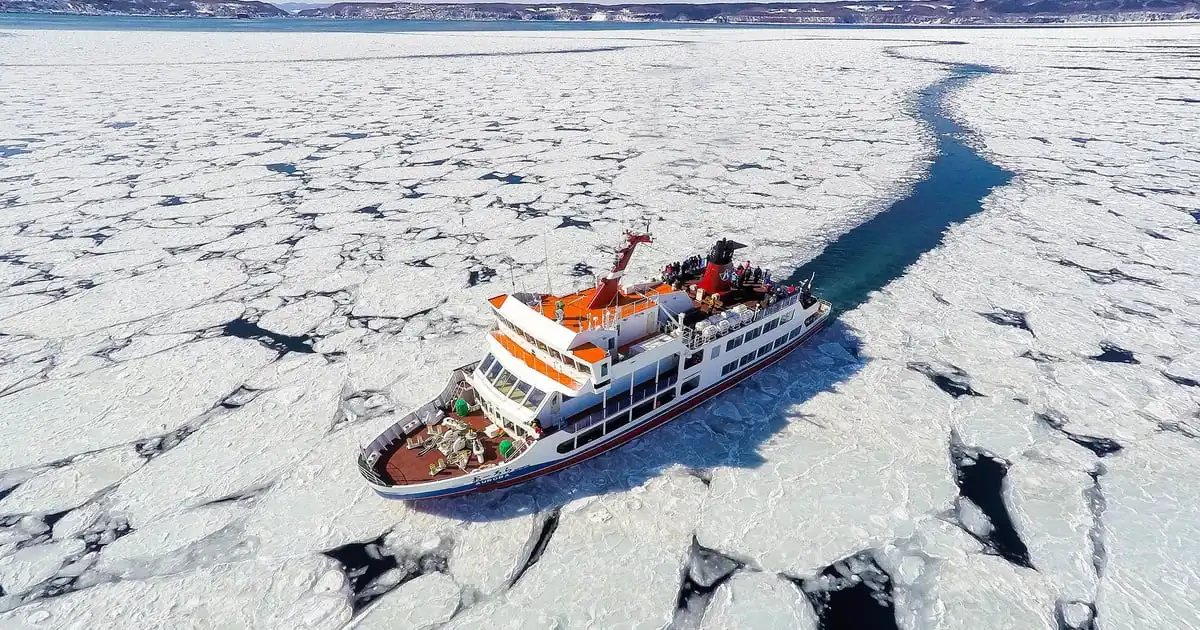 from $295
Editor's pick
Hokkaido Icebreaker Cruise & Museum Day Trip
One long day from Sapporo with the Aurora cruise and the drift ice museum in the price. About five hours by coach each way.
Check Availability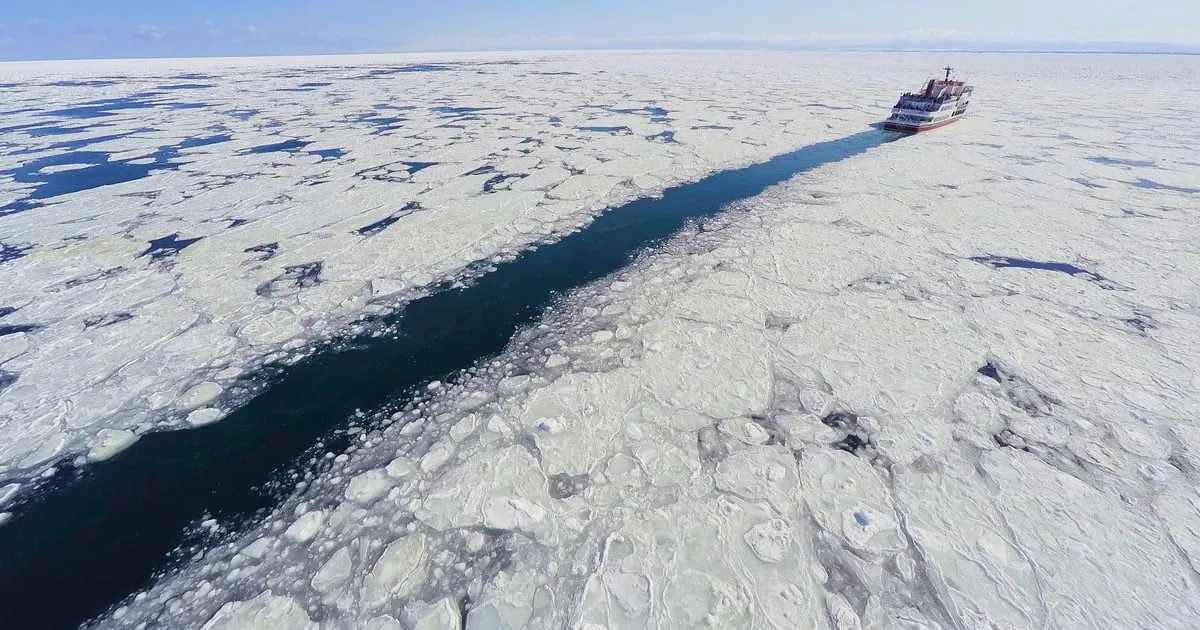 from $398
Aurora + onsen night
Drift Ice Cruise Aurora, Asahiyama Zoo, Onsen 2D1N Winter
Two days from Sapporo: Asahiyama Zoo, an onsen night by Lake Abashiri, then the Aurora cruise. Runs on set February and March dates.
Check Availability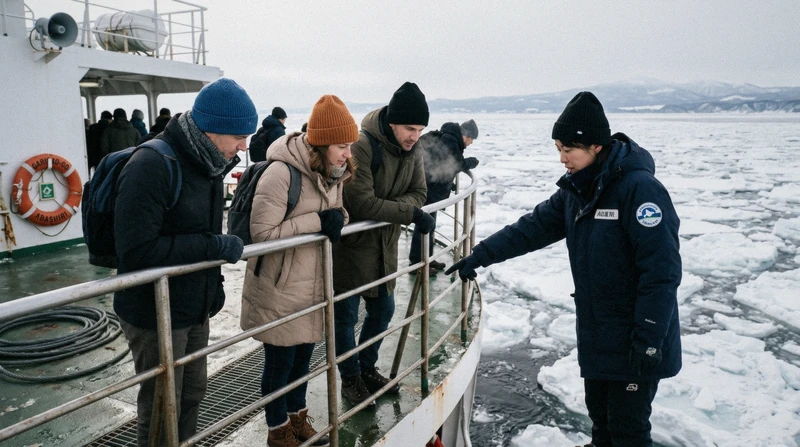 from $2,065
Private guide
Abashiri Drift Ice Cruise & Northern Culture Day Tour
A private van and English-speaking guide in Abashiri for up to 6, with the Aurora ticket and three museums included.
Check Availability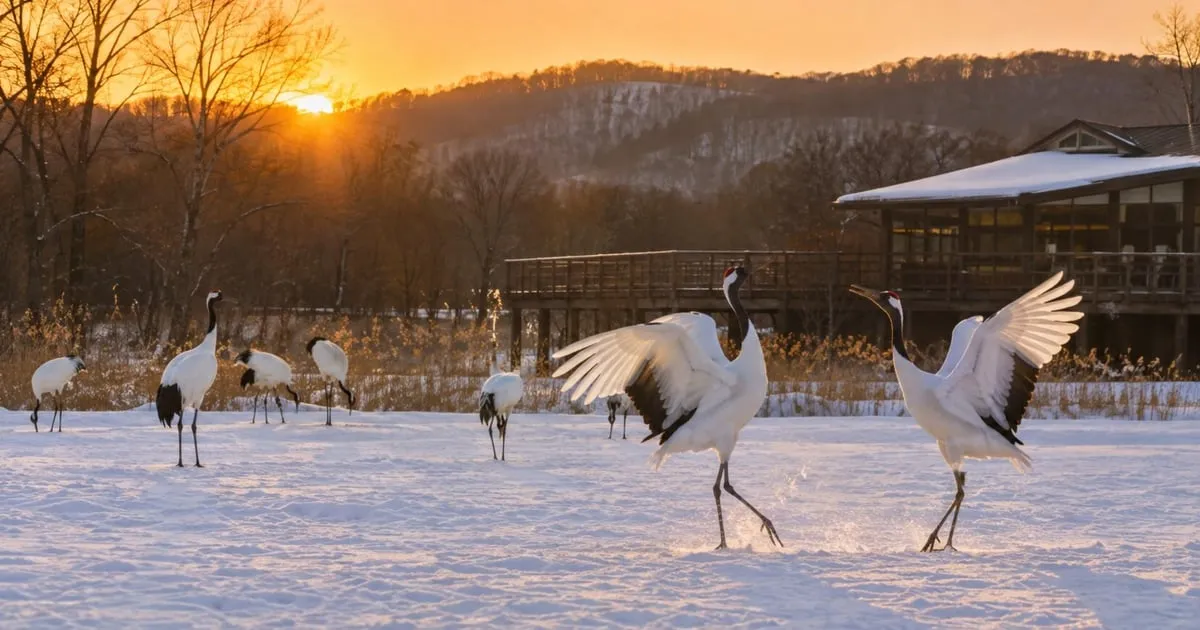 from $975
Red-Crowned Cranes & Drift Ice Hokkaido 4-Day Tour
Four private days from Kushiro: red-crowned cranes, Lake Mashu and the Abashiri drift ice cruise in the price.
Check AvailabilityHow cold is Hokkaido in February and what should I pack?
Abashiri's normal February mean is -5.4 C, with a daily high of -2.0 C and a daily low of -9.6 C.
Hokkaido in February is a real winter. The figures below are JMA normals for Abashiri, and the deck over the ice is colder still.
The numbers
JMA normals for Abashiri give February a mean of -5.4 C, a daily high of -2.0 C and a daily low of -9.6 C. January is similar at a -2.2 C high and -8.9 C low. March warms to a 2.3 C high and a -4.9 C low.
What to pack
Layer up with a thermal base, an insulating middle and a windproof shell. The operator advises a heavy outer layer, ear covers and a scarf for the deck, which runs around -10 to 0 C. Waterproof boots with grip matter on the pier. The cabin is heated, so you can step inside between views.
Snow and disruption
Snow is normal through the month. Hokkaido Love says the Aurora is cancelled in bad weather, so allow flexibility, especially for remote areas like Shiretoko. A spare day protects your cruise as much as your trains.
Sources: JMA climate normals, Abashiri Cruises (Aurora), Hokkaido Tourism Organization.
Is it too cold to visit Japan in February?
It is cold but manageable in Hokkaido if you dress for it, and late winter is the only time you can cruise among drift ice at all.
Too cold depends on your kit and your goal. In Abashiri the February daily high is -2.0 C, which is cold, but planned for.
Staying comfortable
Heated trains, buses and indoor museums break up any outdoor stretch, and the Aurora's cabin is heated with a coffee lounge. Onsen towns are the classic evening answer. The drift ice walk at Utoro puts you in a dry suit for 90 minutes, runs from early February to mid-March depending on ice, and starts from $37.91 (¥6,000), per JNTO.
When cold becomes a problem
Bad weather is the real risk, not the temperature. If transport stops, stay put and reschedule rather than driving. Remote coastal roads to Shiretoko are the most exposed, so keep your plans anchored to Abashiri and treat Utoro as a bonus day.
Source: JMA climate normals.
Why is Japan so cheap in February?
February is a quiet month in much of Japan, but Hokkaido's festival and drift ice season make it busy on the Okhotsk coast.
The cheap-in-February claim holds for much of Japan. It does not fully hold for the Okhotsk coast.
Where February is actually peak
February is the heart of the drift ice season in Abashiri, and seats on the Aurora are unreserved and fill in queue order. Even a booked passenger can be turned away when the ship is full. The mid-February ice window is the demand spike on an Abashiri trip.
Where the savings are
Savings on the cruise itself are small. Groups of 15 or more pay $42.02 (¥6,650) per adult instead of $44.23 (¥7,000). Preschool children ride free, and elementary school children pay $22.12 (¥3,500).
If your dates are fixed to the ice peak, book rooms early.
Sources: Abashiri Cruises (Aurora), Abashiri Cruises (Aurora), Abashiri Cruises (Aurora).
Will flights or trains be delayed due to snow?
Bad weather can disrupt transport and cancel sailings in February, so allow flexibility, especially for remote areas like Shiretoko.
Hokkaido runs a full winter timetable and heavy snow is routine. Most days it just means slow roads.
Getting to Abashiri
From Sapporo the Okhotsk limited express no. 1 leaves at 06:52 and reaches Abashiri at 12:17, and JNTO gives the bus as about 6 hours. From Memanbetsu Airport the airport bus takes 35 minutes to Abashiri Bus Terminal for ¥1,050. Keep your cruise booking for a day after your travel day rather than the same one.
Planning for weather days
Your cruise and your connections are the fragile parts. Build one buffer day on each end of an Okhotsk trip. If a storm hits, shift the cruise rather than cancelling it, since the ice can return within hours of the wind changing.
Sources: JR Hokkaido Group, Japan National Tourism Organization, Hokkaido Airports.
What can I do in Hokkaido in February besides the cruise?
You can walk on drift ice at Utoro, ride the Ryuhyo Monogatari train and visit the Okhotsk Ryuhyo Museum, then add Sapporo to the same trip.
The cruise is the centrepiece, but a February week around it fills easily. Build outward from Abashiri.
A week that works
A sensible shape is a few days in Sapporo, then two or three days on the Okhotsk coast centred on your cruise day. The train from Sapporo takes over 5 hours, so give it a full travel day. Slot Abashiri in at the ice peak.
East coast day list
Morning icebreaker cruise, afternoon at the Okhotsk Ryuhyo Museum, evening in an onsen. On a second day, ride the Ryuhyo Monogatari train to Shiretoko-Shari and continue to Utoro for a drift ice walk in a dry suit, which JNTO says lasts 90 minutes and starts from $37.91 (¥6,000). The Abashiri Prison Museum opens 9:00-17:00 if the sea is closed.
Sources: JR Hokkaido, Abashiri Prison Museum.
When should you book a February trip to Hokkaido?
Book as soon as your dates are fixed, because February is peak season on the Okhotsk coast and Aurora seats are unreserved.
Timing your booking is as important as timing your trip.
Booking order
First fix your cruise date around mid-February, then book flights and rooms around it, then the Ryuhyo Monogatari seat for its running days of January 30 and 31, all of February, and March 6 and 7. The operator takes online and phone bookings and asks for your first-choice sailing only. Guided tours with free cancellation are the low-risk route if you cannot commit early, all compared on the Abashiri cruise homepage.
What the guided options cost
For a single day, the Aurora Icebreaker Day Trip from Sapporo is $295 per person with free cancellation up to 24 hours. For two days, the 2-Day Aurora Cruise, Asahiyama Zoo and Onsen is $398 per person on set dates, plus a Sounkyo Ice Waterfall Festival venue support fee of 1,000 JPY per person paid on site. The 2-Day Drift Ice Cruise and Asahiyama Zoo Tour is $617 per person.
For a private group, the Private Abashiri Drift Ice Cruise and Culture Day is $2,065 per group up to 6. The 4-Day Red-Crowned Cranes and Drift Ice Tour is $975 per person for cranes and ice together.
Sources: Abashiri Cruises (Aurora), JR Hokkaido.
Is Hokkaido in late February better for drift ice?
Late February often offers the best odds, because it sits inside the operator's historical best window of mid-February to early March.
Early February belongs to the festivals. Late February belongs to the ice.
The two windows
Drift ice typically reaches Abashiri from late January, and the operator names mid-February to early March as historically best. If you come early in the month for the festivals, the Abashiri ice may still be thin on your side trip. In late February the ice odds are historically at their best, and the Ryuhyo Monogatari train runs every day of the month.
A late-February plan
Arrive around the third week, cruise on days two and three, museum and train on day four, and keep a fifth day as your ice buffer. If the ice is late in a warm year, that buffer is the difference between a Notoro Cape sea cruise and a morning in the floes.
Sources: Abashiri Cruises (Aurora), Hokkaido Tourism Organization, JR Hokkaido.
February in Abashiri: common questions
Is February a good time to visit Hokkaido?
Yes. February sits inside the Aurora's January 20 to March 31 season. See when drift ice reaches Abashiri.
Which is the best month to go to Hokkaido?
For an Abashiri cruise guide, February, with the historical best odds from mid-February to early March according to the cruise operator.
Is it too cold to visit Japan in February?
No, if you pack for it. Abashiri's normal February high is -2.0 C and low -9.6 C. Layers and windproof outer gear handle a cruise day.
Why is Japan so cheap in February?
Much of Japan is quiet in February, but the Okhotsk coast is in peak drift ice season, so book early. See Abashiri tours for day options.
Does it snow every day in February?
Not every day, but snow is normal through the month and the Aurora is cancelled in bad weather. Keep a spare day, see drift ice in Hokkaido.
Will flights or trains be delayed due to snow?
Bad weather can disrupt transport and sailings. Allow flexibility, especially for Shiretoko, and fly into Memanbetsu Airport to cut travel time.
Do festivals get canceled due to snowstorms?
Rarely, since the events are built from snow and ice. Your Abashiri cruise and travel connections are more likely to shift than the festivals.
What happens if there is no drift ice on my cruise day?
The small ship Aurora 3 is cancelled and the large ship runs a sea cruise to Notoro Cape instead. See the no-ice fallback.
More Guides
- Hokkaido Winter Tours with the Drift Ice
Three private Hokkaido winter tours of 4 to 7 days with cranes, eagles and the drift ice, compared for 2027. See which one fits your trip.
- Abashiri Tours: Private Drift Ice Days and Culture Trips
Compare Abashiri tours for 2027, from a 2.5-hour e-bike ride to an 8-hour private drift ice day. See what each includes and who it suits.
- Memanbetsu Airport to Abashiri and the Drift Ice Cruise
Memanbetsu Airport to the Abashiri drift ice pier by bus and car: routes, taxi, car and train for the 2027 season. Plan the trip.